
Learning how to play Tower Dash takes one round, though playing it with a clear head takes a little longer. A crane swings a block above a growing tower. You decide when to release it. Each block that lands cleanly adds a floor and pushes the multiplier up, and between drops you can take the win. A block that misses ends the round and the stake goes with it.
A Round in Five Moves
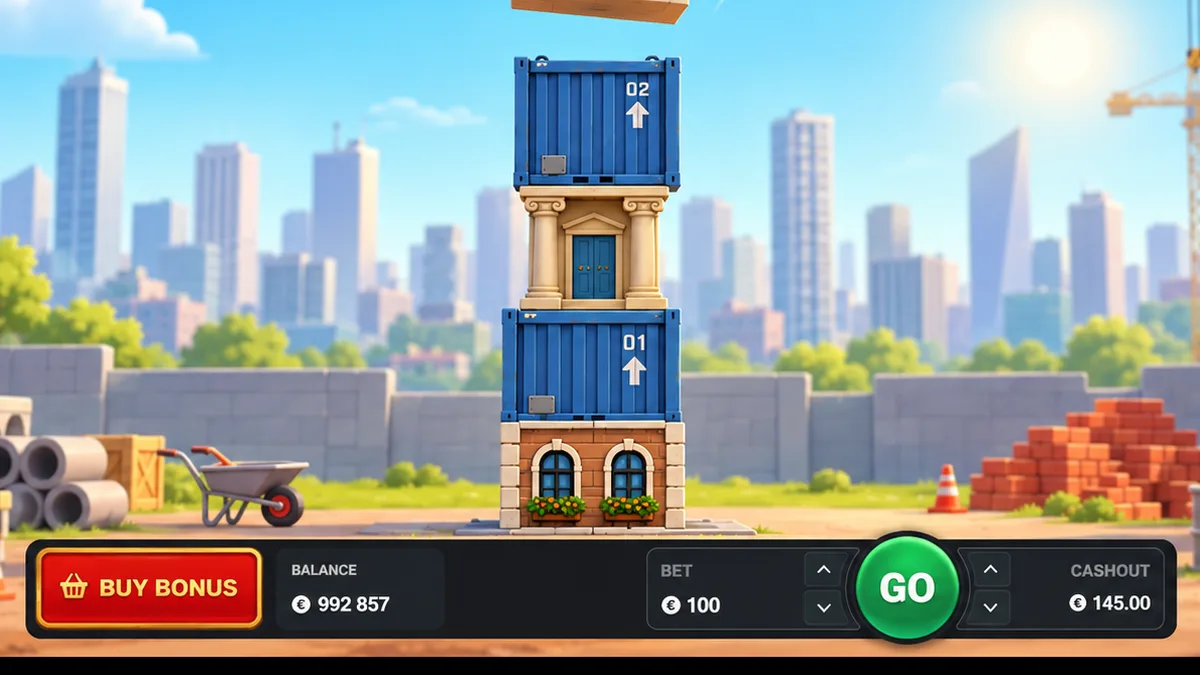
Set the stake
Choose the amount per round. Minimum and maximum stakes are set by the casino, not by the game.
Pick a difficulty level
Select one of the three levels before the round starts. The choice holds until the round ends.
Release the first block
The crane sways the block from side to side. Tap to drop it when it sits over the base.
Build and watch the multiplier
Each clean landing adds a floor and raises the multiplier shown on screen.
Cash out or drop again
Between drops, take the current win or keep building. A miss ends the round with the stake lost.
The whole loop takes seconds. That speed is the main thing new players underestimate. Before trying it with rupees, a few rounds on the free demo show how the crane moves and how your own timing holds up.
Three Difficulty Levels
InOut Games confirms three levels of difficulty for Tower Dash. Their names and exact figures are not published, so the tabs below describe them only in general terms, from the calmest to the sharpest setting.
The gentlest setting. Multiplier steps per floor tend to be smaller, and the risk on each drop is lower. It suits players who want longer rounds and a slower build towards a modest exit.
A balance between the other two. Each floor is worth more than on the lower level, and each drop carries more risk. Many players use it once the controls feel familiar.
The sharpest setting. Bigger multiplier steps come with a higher chance that the round ends early. Short, volatile sessions are typical, and a cash-out plan carries the most weight on this level.
The trade-off is simple: more reward per floor means more risk per drop. No level is better than another in the long run, and the choice is made before the round, never during it.
A sensible way to choose is to match the level to the session you have in mind. Long, steady sessions on a fixed budget sit more comfortably on the lower setting. A short session with a small stake and a bigger target fits the higher one. Switching between levels from round to round is allowed, but doing it after every loss usually turns a plan into guesswork.
Bonus Buy: Two Paid Features
Tower Dash offers two Bonus Buy options. Each is bought for a price shown in the game. InOut Games has not published that price, so it can only be checked inside the lobby where you play.
Touch the Skies!
Three attempts at the tower. Progress is kept after a failed drop, so one miss does not wipe out what was already built.
Build Your City!
Free spins in which towers build themselves. The more towers are completed, the higher the total multiplier and the final win.
Both features change the rhythm of the game. Touch the Skies! softens the cost of one bad drop. Build Your City! hands the building to the game and lets the city grow on its own. Neither one makes a profit more likely, and a feature round can still end with less than its price.
The rules fit in one short loop, and a few rounds make the crane timing feel natural.
What You See on the Game Screen
| Element | What it does |
|---|---|
| Crane and block | Swings the next block above the tower; your tap releases it |
| Tower | Grows one floor with every clean landing |
| Multiplier | Shows the current value of the round, rising with each floor |
| Cash-out button | Active between drops; ends the round and pays the stake times the multiplier |
| Stake selector | Sets the amount per round before the start |
| Level selector | Chooses one of the three difficulty levels before the start |
| Bonus Buy | Opens Touch the Skies! or Build Your City! for a price shown in the game |
Cashing Out Between Drops
The cash-out button works only in the pause between two drops. Once a block is falling, the decision is made. Third-party game databases list no auto cash-out for Tower Dash, so there is no setting that exits for you at a chosen multiplier. Every exit is a deliberate tap.
A worked example
Imagine a stake of Rs 50. After several clean floors the multiplier reads x2. Cashing out at that point returns Rs 100. Dropping one more block could raise the figure, or it could miss and leave nothing. The numbers are illustrative only; the actual multiplier per floor depends on the level and is not published.
Numbers From Outside Sources
InOut Games does not publish an RTP or a maximum win on its game page. Third-party game databases list an RTP of 96% and a highest multiplier of x10,000. Treat these as reference points, not promises: RTP describes a long-run average across a huge number of rounds and says nothing about a single session.
After the Rules
With the loop understood, the next questions are about money and timing. The strategy page looks at exit points and stake sizes, the real-money page covers playing in rupees, and the Tower Dash vs Tower Rush comparison sets the rules side by side with a similar crane game. Real-money rounds are 18+ only.